Government & Regulatory Cyber Alerts

Cybersecurity teams need to know when a new government directive or advisory lands, what's driving it, and what it actually means for patch and detection priorities, often within hours, not days. This page covers analysis of directives and advisories from national cyber authorities worldwide, including US CISA, UK NCSC, and EU CERT-EU covering what it means for teams running patch and detection cycles.

The Government & Regulatory Cyber Alert Reality in 2026


Regulatory cybersecurity obligations expanded sharply through 2025 and into 2026, and the pace shows no sign of slowing:

Image

1,484 vulnerabilities sit in the CISA Known Exploited Vulnerabilities catalog as of early 2026 — up 20% year-on-year after 245 additions in 2025, 24 of them tied directly to ransomware campaigns. (CISA KEV Catalog; SecurityWeek analysis)

22 of 27 EU Member States have adopted NIS2 transposition legislation as of May 2026 — but five (France, Ireland, Luxembourg, the Netherlands, and Spain) remain in legislative procedure, and the deadline for the first mandatory compliance audit has moved from December 2025 to 30 June 2026. (European Commission NIS2 Transposition Tracker; ECSO)

Four business days is the SEC's filing window under Form 8-K Item 1.05 — but the clock starts at the moment a company determines an incident is material, not when the incident is discovered, making internal materiality assessment the real bottleneck. (SEC.gov; PwC)

What Government & Regulatory Cyber Alerts Covers

CISA Emergency and Binding Operational Directives

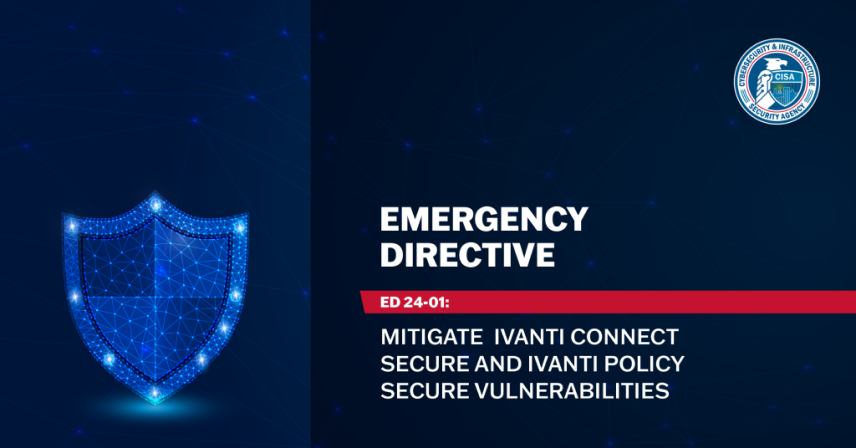
We track CISA Emergency Directive (ED) and Binding Operational Directive (BOD) as it's issued from urgent, campaign-specific EDs with short remediation windows, to standing requirements like BOD 22-01's KEV remediation mandate and BOD 26-04's risk-based prioritisation and forensic triage rules. For each one, we cover the affected products, the deadline, and what it means for organisations outside the federal mandate.

NCSC and international government advisories

Beyond CISA, national cybersecurity authorities - the UK's NCSC among them, issue their own advisories, often covering the same active-exploitation campaigns from a different regulatory angle. We track these alongside CISA output so UK and international readers aren't left working from a US-only picture of what's actively being exploited and what agencies are recommending.

Hackerstorm's wider intelligence coverage

Coverage of CISA , NCSC Directives, advice and guidance as it's issued, plus weekly updates on actively exploited vulnerabilities added to the KEV catalog. Where advice follows a confirmed breach like F5 or Cisco behind ED 26-01 and ED 25-03 we link you through to our Operational Threat Intelligence & Lessons Learned analysis of how the incident actually unfolded. Where a directive touches AI-enabled or shadow AI risk, we point you to our AI Threats & Fraud Intelligence coverage. This page is your entry point to the directives, advice, guidance specific to vulnerbaility management; the deeper vulnerability, breach, or threat analysis.

Start Here - Foundational Reading


New to Hackerstorm's AI threat intelligence coverage?

These three articles establish the analytical framework and incident context behind everything else published here.

Sign up to receive our latest threat intelligence and analysis. No marketing. No noise.

Frequently asked questions

Explore our comprehensive FAQ section to find quick answers to commonly asked questions about vulnerability data, our products and services.

Emergency Directives (EDs) and Binding Operational Directives (BODs) are formally mandatory only for US Federal Civilian Executive Branch agencies. In practice, they function as an authoritative signal for everyone else: an ED is only issued in response to confirmed active exploitation, so the underlying vulnerability and deadline are relevant risk information regardless of whether an organisation is legally bound by the directive.

By using this site, you agree to our Terms & Conditions.

COOKIE / PRIVACY POLICY: This website uses essential cookies required for basic site functionality. We also use analytics cookies to understand how the website is used. We do not use cookies for marketing or personalization, and we do not sell or share any personal data with third parties.

Terms & Privacy Policy