What Vulnerability Intelligence Covers
Vulnerability data is widely available. Understanding how it translates into real-world risk is not. HackerStorm connects technical data to:
EPSS and KEV-based prioritisation
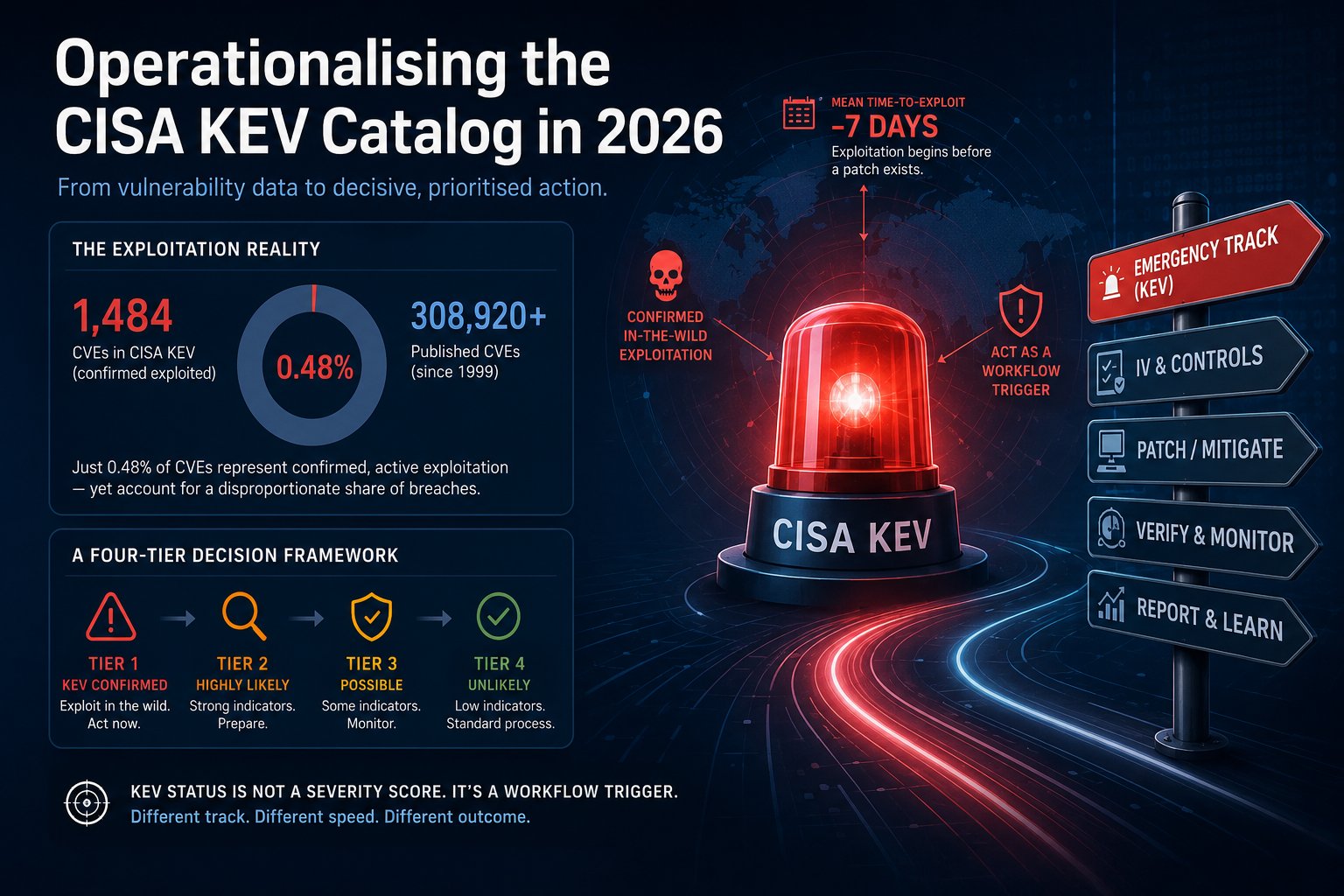
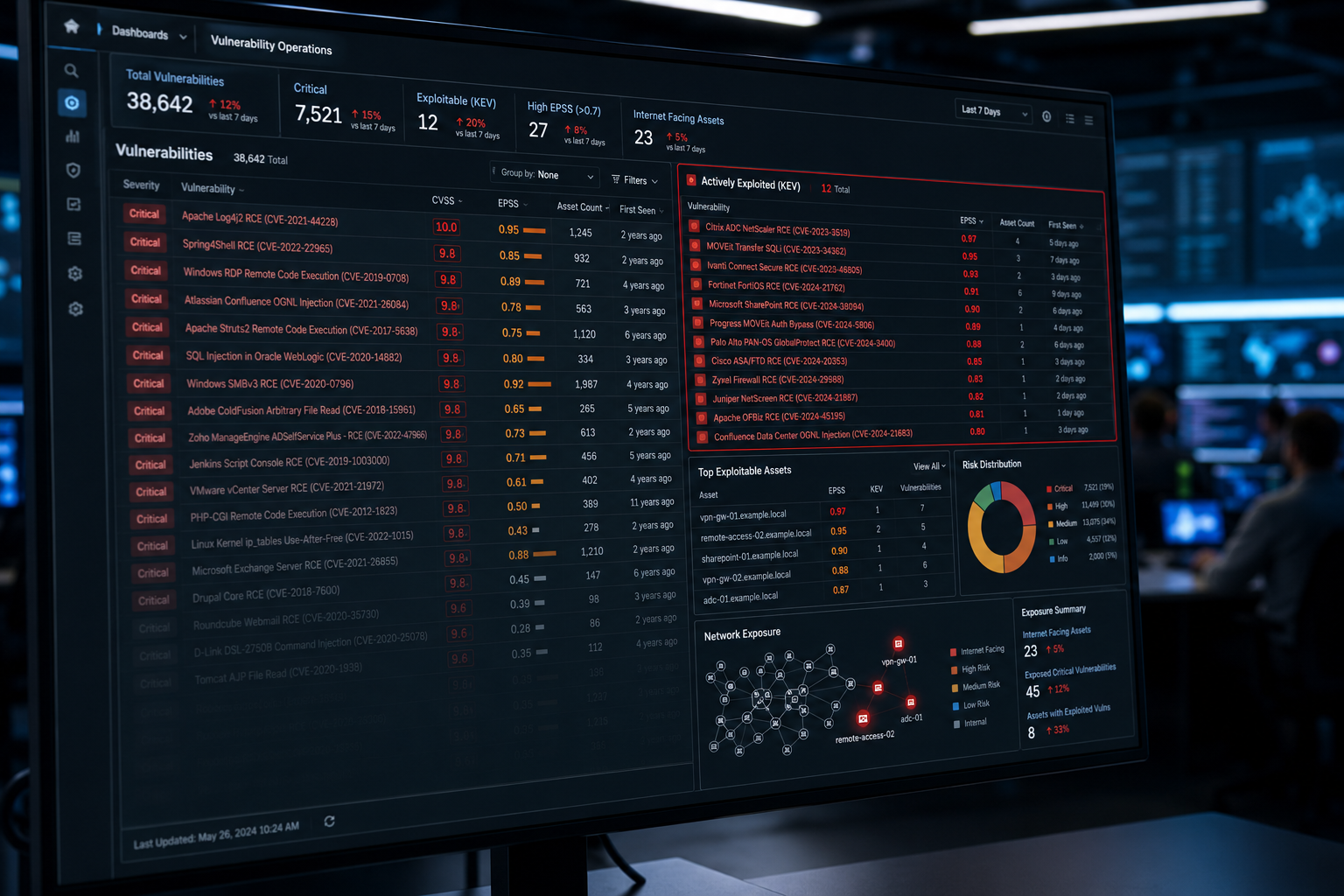
CVSS measures theoretical severity. EPSS predicts the probability that a vulnerability will be exploited in the next 30 days. CISA KEV confirms active exploitation in the wild. Used together with asset reachability, these three signals replace severity-based guesswork with exploitation-driven decision making. Hackerstorm analysis applies this model across published CVEs to surface what actually warrants immediate action.
Breach post-mortems and lessons learned
Real-world breach analysis provides the ground truth that vendor advisories rarely supply. Hackerstorm examines how specific vulnerabilities were exploited in confirmed incidents — what defenders missed, where detection failed, and what controls would have interrupted the attack chain. These analyses inform both immediate remediation priorities and longer-term programme improvements.
Exploit weaponisation and mass campaign analysis
Not all exploits are equal. A proof-of-concept on GitHub carries different operational weight than a weaponised exploit actively deployed in ransomware campaigns. Hackerstorm tracks weaponisation stages — from initial disclosure through PoC publication to in-the-wild exploitation — helping teams calibrate urgency based on attacker behaviour rather than vendor severity ratings.
Remediation guidance and SOC workflows
Vulnerability intelligence is only operationally useful if it drives action. Hackerstorm analysis includes practical remediation guidance, SOC triage workflows, detection engineering recommendations, and prioritisation frameworks designed for security teams operating under real-world resource constraints — not theoretical ideal-state environments.