What Operational Threat Intelligence Covers
Threat intelligence is operationally useful only when it is specific enough to drive action. Hackerstorm operational threat intelligence is built around four disciplines that connect confirmed attacker behaviour to defensive response.
Breach post-mortems and operational failure analysis
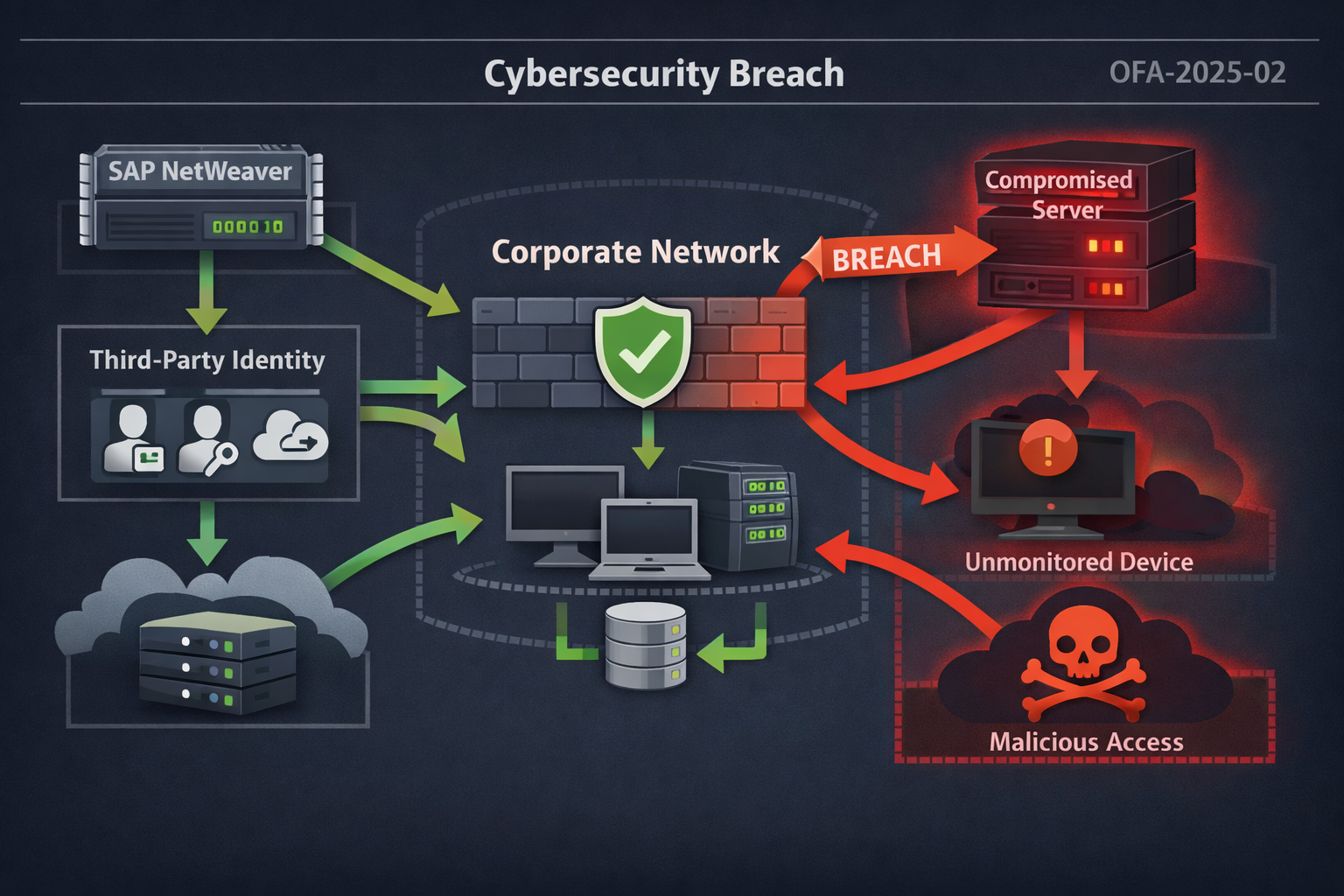
Hackerstorm's Operational Failure Analysis (OFA) series examines confirmed breach incidents in depth — reconstructing the attack chain from initial access through lateral movement to impact, identifying the specific control failures and detection gaps that allowed each stage to succeed, and extracting the defensive lessons that apply beyond the individual incident. Each OFA is mapped to MITRE ATT&CK techniques and includes practical detection and remediation guidance drawn directly from what failed in the incident under analysis.
Identity-based threats and initial access analysis
Identity has become the primary enterprise attack surface. Credential theft via infostealer malware, SaaS API token harvesting, MFA fatigue attacks, OAuth token abuse, and session hijacking are now the dominant initial access and persistence mechanisms in enterprise intrusions — and they generate telemetry that looks legitimate without tuned detection logic. Hackerstorm covers the full identity threat chain from credential exposure through to ransomware deployment, with detection engineering guidance for each stage. The path from identity exposure to ransomware deployment is now well-documented: stolen credentials provide initial access, living-off-the-land techniques avoid detection during lateral movement, and domain-level identity compromise enables the mass encryption that defines ransomware impact. Each stage of that chain is detectable — but only with the right telemetry in place before the intrusion begins.
Attack chain visibility and MITRE ATT&CK mapping
Understanding how attacks progress — not just that they happened — is what separates actionable threat intelligence from breach reporting. Hackerstorm analysis maps confirmed attacker behaviour to the MITRE ATT&CK framework at the technique level, identifying the specific tactics used for initial access, execution, persistence, privilege escalation, lateral movement, and exfiltration. This mapping enables detection engineers to build or validate coverage against the techniques that real threat actors are actively using, rather than hypothetical attack paths.
Structural gap analysis and control improvement
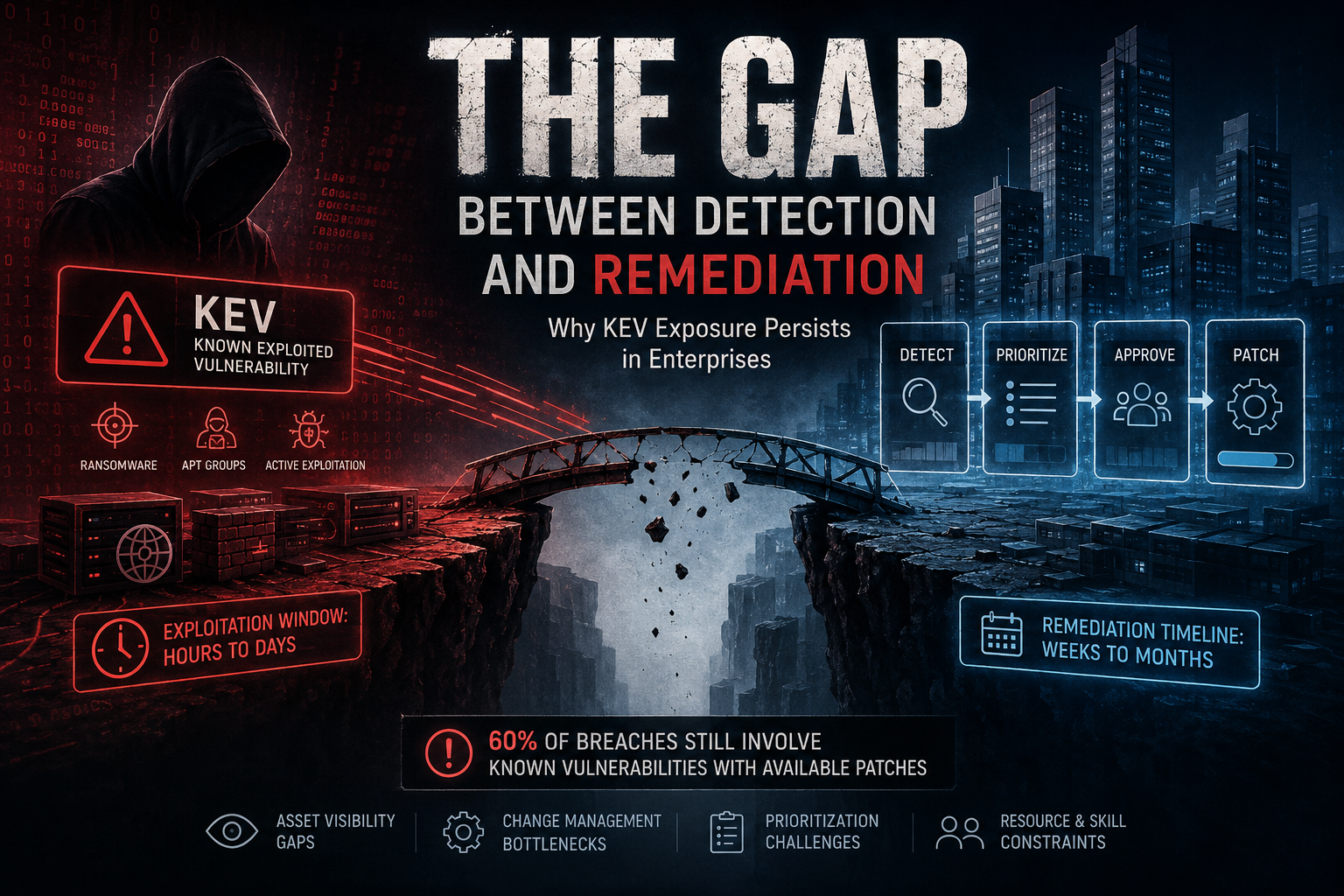
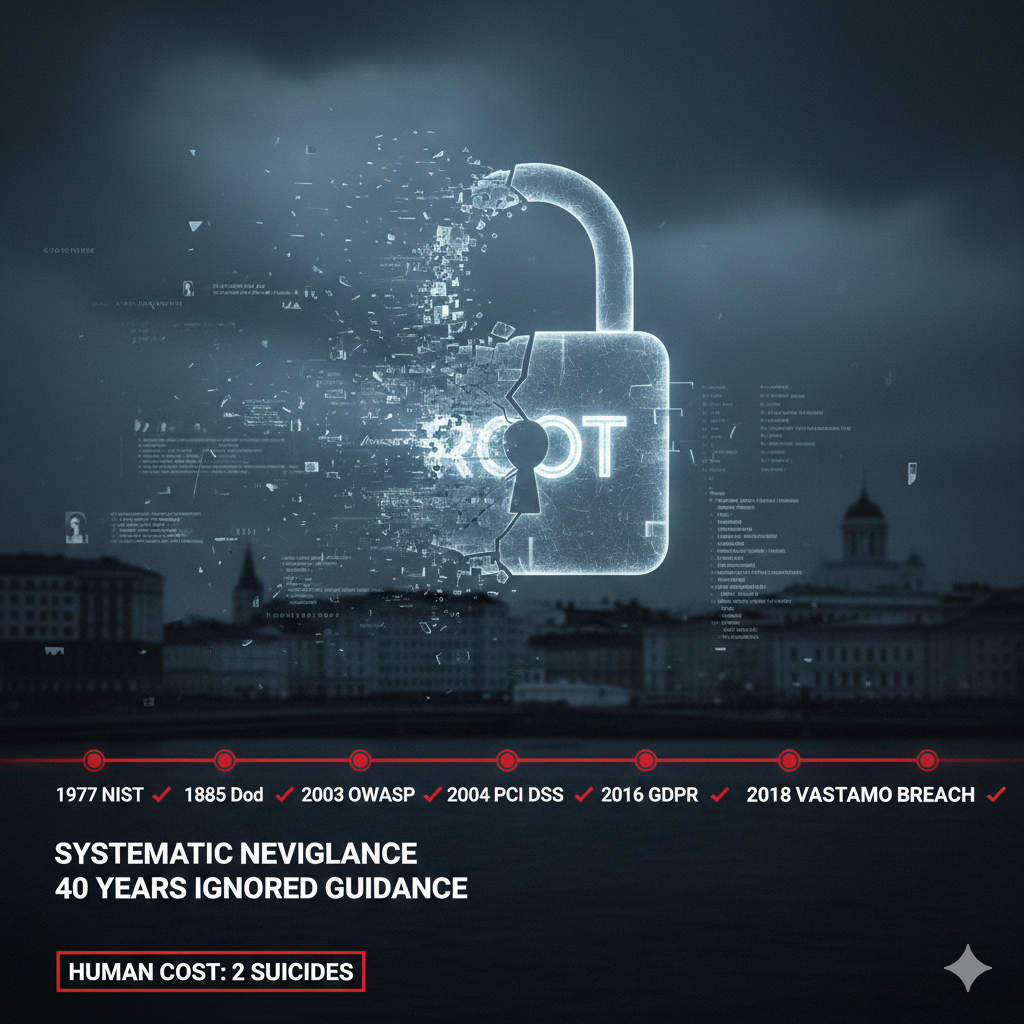
Individual breach post-mortems reveal patterns. Hackerstorm identifies the structural gaps — in detection coverage, patch velocity, asset visibility, identity governance, and incident response workflows — that appear repeatedly across different incidents and different organisations. These are not one-off failures. They are systemic weaknesses that persist because they sit between organisational boundaries, between tool capabilities, and between the theoretical security architecture and the operational reality of how environments are actually managed.